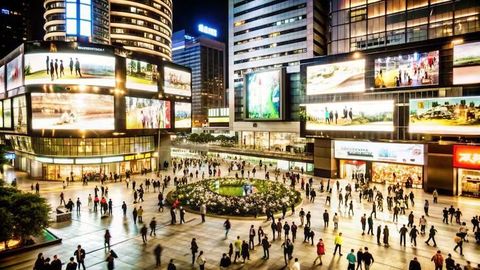
LED Digital Billboards Guide to Outdoor Display Technology
LED digital billboards are changing outdoor advertising. These electronic displays use light-emitting diodes to present images, videos, animations and text in public spaces. They are commonly installed along highways, commercial buildings, shopping areas and transport locations.
LED digital billboards provide a digital alternative to traditional printed advertising boards. Their content can be updated electronically, allowing different messages to appear on the same screen at scheduled times. Understanding their technology, types, applications and installation requirements helps explain their growing role in outdoor advertising.
What Are LED Digital Billboards?
LED digital billboards are large electronic display systems designed to show visual content in outdoor environments. They use an arrangement of light-emitting diodes that produce coloured images and text on a screen.
A digital billboard display generally consists of LED modules, a supporting structure, control equipment, power systems and software. These components work together to display scheduled advertising content.
Unlike conventional printed boards, digital billboard screens can show multiple advertisements without replacing physical printed material. Content may include static images, short videos, announcements and other visual messages.
How LED Billboard Technology Works
An LED display billboard uses small light-emitting diodes arranged in groups to create pixels. Each pixel contributes to the overall image displayed on the screen.
The display controller receives digital content and sends instructions to the LED modules. The modules illuminate in different colour combinations to create text, graphics and moving images.
Outdoor LED billboards are designed to operate under changing environmental conditions. Their brightness, protective housing and cooling arrangements are important considerations for outdoor use.
Types of LED Digital Billboards
Different digital billboard formats are used according to location, viewing distance, screen size and advertising requirements.
Traditional Outdoor LED Billboards
Traditional outdoor LED billboards are large displays commonly installed beside highways, roads and commercial areas. They show advertisements, public announcements and other visual messages.
Their size and brightness are selected according to the surrounding environment and expected viewing distance.
3D LED Digital Billboards
3D LED digital billboards use specially designed visual content to create an illusion of depth. They may use perspective-based animation and carefully designed screen layouts to produce three-dimensional effects.
Some installations use corner-shaped or curved display arrangements. The visual effect depends on the screen design, content production and the viewer's position.
Large LED Display Boards
Large LED display boards are used in public spaces, stadiums, shopping centres and commercial buildings. They can display advertising content, event information and announcements.
The required screen dimensions depend on the available installation area and the intended audience.
Digital LED Signage
Digital LED signage includes smaller electronic displays used for information and advertising. These screens may appear outside retail locations, at transport facilities and on commercial properties.
They are often used to communicate changing messages in locations where traditional signs may require frequent replacement.
Common Applications of Digital Billboard Advertising
Digital billboard advertising is used across several industries and public environments. Its applications depend on the location, audience and type of information being displayed.
Highways and roads: Outdoor LED billboards display commercial messages and selected public information along major routes.
Shopping centres: Digital advertising boards present promotional content, store information and event announcements.
Sports stadiums: Large LED screens display event information, sponsor messages, scores and visual content.
Commercial buildings: LED wall advertising can be used on building exteriors and other prominent architectural spaces.
Transport locations: Airports, railway stations and bus terminals use digital displays for announcements and selected advertising.
Public spaces: Digital displays may communicate community notices, event schedules and public awareness messages.
Key Features of Outdoor LED Billboard Screens
Outdoor LED billboard screens include several technical features that influence their display performance and suitability for different environments.
Brightness
Brightness determines how clearly a screen can be viewed under different lighting conditions. Outdoor displays generally require sufficient brightness to remain visible during daylight.
Automatic brightness adjustment may help adapt screen output to surrounding light conditions.
Pixel Pitch and Resolution
Pixel pitch refers to the distance between the centres of neighbouring pixels. It is commonly measured in millimetres.
A smaller pixel pitch generally supports more detailed images at shorter viewing distances. Larger pixel pitches may be suitable for billboards viewed from farther away.
Weather Protection
Outdoor LED panels are exposed to sunlight, rain, dust and temperature changes. Protective enclosures and suitable environmental ratings help determine whether a display is appropriate for its installation location.
Refresh Rate
Refresh rate describes how frequently the display updates its image. It can influence the appearance of moving content and how the screen is captured by cameras.
Content Management
Digital billboard display systems use software and controllers to schedule and update screen content. Depending on the system, content may be managed locally or through a remote network connection.
LED Digital Billboards Compared With Traditional Billboards
Traditional and digital billboards serve outdoor communication purposes, but their operating methods differ.
| Feature | Traditional Billboard | LED Digital Billboard |
|---|---|---|
| Display method | Printed material | Electronic LED modules |
| Content changes | Physical replacement | Digital content updates |
| Content format | Mainly static images | Images, text and videos |
| Multiple advertisements | Usually requires separate panels | Can display scheduled content |
| Power requirement | Generally no display power | Requires electrical power |
| Maintenance | Printed material and structure | Electronic components and structure |
The appropriate format depends on the location, communication requirements, infrastructure and operating conditions.
Factors to Consider When Selecting Digital Billboard Screens
Selecting digital billboard screens involves evaluating technical requirements and the intended installation environment.
Screen Size and Viewing Distance
The screen dimensions should match the available space and expected viewing distance. A display intended for highway visibility may require different specifications from one installed near pedestrian areas.
Resolution Requirements
Resolution should be considered alongside screen size and viewing distance. Content with fine details may require a different pixel pitch from large text or simple graphics.
Installation Structure
An outdoor LED billboard requires a suitable supporting structure. Engineers and qualified installation professionals should assess structural strength, wind exposure, electrical arrangements and applicable local requirements.
Power and Cooling
LED displays require a stable electrical supply. Larger installations may also need appropriate ventilation or cooling systems to manage operating temperatures.
Maintenance Access
Maintenance access should be considered before installation. Technicians may need safe access to modules, power supplies, controllers and other components.
LED Billboard Manufacturers and Industry Considerations
LED billboard manufacturers produce different display modules, cabinets, controllers and complete screen systems. Product specifications can vary according to screen size, pixel pitch, brightness, environmental protection and intended application.
LED billboard suppliers may provide different configurations for roadside displays, commercial buildings and indoor-outdoor installations. When evaluating an LED display company, relevant considerations include technical documentation, component specifications, warranty conditions and maintenance arrangements.
Installation companies also play an important role in preparing supporting structures, electrical connections and display systems. Local advertising regulations, permits and road-safety requirements should be reviewed before installing an outdoor advertising screen.
Frequently Asked Questions
What are LED digital billboards used for?
LED digital billboards are used for outdoor advertising, public announcements, event information, commercial messages and digital signage in public locations.
What is an outdoor LED billboard?
An outdoor LED billboard is an electronic advertising display designed for external environments. It uses LED modules to present digital images, text and videos.
What is the difference between an LED display board and a digital billboard?
An LED display board is a general term for an electronic LED screen. A digital billboard is a display specifically used for advertising or public communication, often in prominent outdoor locations.
What are 3D LED digital billboards?
These are digital displays that use specially created visual content and screen arrangements to produce an illusion of three-dimensional depth.
What affects LED screen prices?
LED screen prices can vary according to screen dimensions, pixel pitch, brightness, component quality, installation structure, control systems and environmental protection requirements.
Conclusion
LED digital billboards are an important part of modern outdoor display technology. They use electronic LED modules and digital control systems to present changing visual content across roads, commercial buildings, shopping areas and public spaces.
Understanding display types, resolution, brightness, installation requirements and maintenance helps explain how these systems operate. Their suitability depends on the intended application, location, technical specifications and applicable regulations.

Related Post...