Industrial Parts Store Guide for Components and Selection
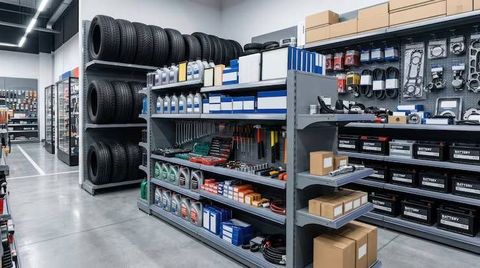
An industrial parts store supports essential manufacturing operations. It provides access to components used in machinery, equipment, and maintenance activities. Industrial parts suppliers and distributors generally handle products required by factories, workshops, warehouses, and processing facilities.
An industrial parts store may include mechanical components, electrical products, hydraulic fittings, pneumatic devices, fasteners, and automation parts. These products help maintain equipment, replace worn components, and support routine industrial operations.
Industrial parts stores can operate through physical outlets, online platforms, or distribution networks. Their product range depends on the industries they serve and the equipment commonly used by their customers.
Importance of Industrial Parts in Manufacturing
Industrial parts help machines and production systems perform their intended functions. Individual components may appear small, but they often play important roles in equipment movement, power transmission, control, and material handling.
Supporting Equipment Maintenance
Industrial maintenance parts are used during routine inspections, servicing, and repairs. Replacing damaged or worn components can help maintain equipment functionality and reduce interruptions caused by mechanical problems.
Maintaining Production Operations
Manufacturing facilities depend on different machine components to carry out production activities. Industrial replacement parts help maintenance teams address component failures and maintain equipment according to operational requirements.
Supporting Equipment Compatibility
Industrial machinery uses components with specific dimensions, materials, electrical ratings, and operating characteristics. Selecting compatible parts is important for proper installation and equipment performance.
Managing Spare Parts Requirements
Factories often maintain inventories of frequently required components. Industrial spare parts suppliers and distributors support this process by providing access to replacement items for different machinery and equipment categories.
Types of Industrial Parts Available
Industrial parts stores may organize products into several categories based on their functions and applications.
Mechanical Components
Mechanical components support movement, rotation, positioning, and power transmission. Common examples include bearings, shafts, gears, couplings, belts, chains, pulleys, and mechanical seals.
Mechanical spare parts suppliers typically handle components used in manufacturing machines, pumps, conveyors, compressors, and other industrial equipment.
Industrial Electrical Parts
Electrical components help distribute, control, and protect electrical power in industrial systems. Examples include switches, circuit breakers, contactors, relays, connectors, cables, sensors, and control panels.
Industrial electrical parts suppliers may provide products for machinery installations, electrical maintenance, and automation systems.
Hydraulic Parts
Hydraulic components use pressurized fluid to transmit power and control movement. They are commonly found in industrial presses, lifting systems, construction equipment, and manufacturing machinery.
Typical hydraulic parts include pumps, valves, cylinders, hoses, filters, fittings, and seals. Hydraulic parts suppliers generally organize these products according to pressure ratings, connection types, and equipment requirements.
Pneumatic Parts
Pneumatic components use compressed air to operate machinery and control movement. They are frequently used in packaging equipment, assembly lines, material handling systems, and automated production processes.
Common products include air cylinders, pneumatic valves, filters, regulators, lubricators, hoses, and fittings. Pneumatic parts suppliers may offer components for different air pressure and flow requirements.
Industrial Automation Parts
Automation components support machine control, sensing, monitoring, and process coordination. They are used in automated production lines, packaging systems, robotics, and industrial control applications.
Examples include programmable logic controllers (PLCs), proximity sensors, photoelectric sensors, servo motors, drives, encoders, and human-machine interfaces.
Conveyor Parts and Industrial Fasteners
Conveyor systems use components to move materials between production and storage areas. Conveyor parts suppliers may provide rollers, belts, bearings, pulleys, chains, and belt accessories.
Industrial fasteners suppliers handle products such as bolts, nuts, screws, washers, threaded rods, and anchors. These components are used to connect and secure machinery, structures, and equipment assemblies.
Common Industrial Parts and Their Applications
The following table provides an overview of frequently used industrial components and their general applications.
Industrial Part | Main Function | Common Applications |
|---|---|---|
Bearings | Support rotating movement | Motors, pumps, conveyors |
Gears | Transfer motion and torque | Gearboxes, machinery |
Electric motors | Convert electrical energy into mechanical movement | Pumps, fans, machines |
Hydraulic pumps | Move pressurized fluid | Presses, lifting systems |
Pneumatic cylinders | Produce linear movement | Packaging, automation |
Sensors | Detect physical conditions | Production lines, control systems |
Couplings | Connect rotating shafts | Pumps, compressors |
Conveyor belts | Move materials | Warehouses, factories |
Fasteners | Join components | Machinery, equipment frames |
Industrial valves | Control fluid flow | Processing systems, pipelines |
How to Choose Industrial Replacement Parts
Selecting suitable industrial equipment parts requires attention to compatibility, operating conditions, and equipment specifications. The following factors can help guide the selection process.
Check Equipment Specifications
Identify the equipment manufacturer, model number, serial number, and required component specifications. These details help distinguish between parts that may look similar but have different technical requirements.
Confirm Dimensions and Compatibility
Check measurements, mounting arrangements, connection types, shaft sizes, and other relevant specifications. A component that does not match the original equipment requirements may not fit or function correctly.
Review Material and Operating Conditions
Consider the environment in which the part will operate. Temperature, moisture, vibration, pressure, chemicals, and mechanical loads can influence the required material and component design.
Evaluate Manufacturer Documentation
Product datasheets, technical drawings, installation instructions, and manufacturer part numbers can help identify suitable components. Documentation is particularly important for electrical, hydraulic, and automation equipment.
Consider Availability and Inventory
Industrial facilities may need frequently used components for scheduled maintenance. Reviewing stock availability and expected delivery arrangements can support spare-parts planning.
Industrial Parts Suppliers and Distribution Channels
Industrial parts suppliers operate through different distribution models. Understanding these channels can help businesses identify where particular components are available.
Industrial Parts Distributors
Industrial parts distributors usually handle products from multiple manufacturers. Their inventories may include mechanical, electrical, hydraulic, pneumatic, and automation components.
Industrial Parts Manufacturers
Industrial parts manufacturers produce components according to specific designs, technical requirements, and production processes. Some specialize in standard components, while others manufacture parts for particular equipment applications.
Industrial Machinery Parts Suppliers
Industrial machinery parts suppliers focus on components used in production equipment, processing machines, material handling systems, and other industrial installations.
Industrial Parts Online Store
An industrial parts online store allows users to explore product categories and review available technical information digitally. Online catalogs may include product descriptions, dimensions, model numbers, specifications, and compatibility details.
When using an online catalog, checking the exact part number and technical documentation is important before selecting a component.
Frequently Asked Questions
What products are available in an industrial parts store?
An industrial parts store may include bearings, gears, motors, fasteners, electrical components, hydraulic fittings, pneumatic devices, conveyor parts, and automation products.
How do I find reliable industrial parts suppliers?
Review product specifications, manufacturer information, technical documentation, inventory details, and the supplier's ability to identify compatible components.
What are industrial replacement parts?
Industrial replacement parts are components used to replace damaged, worn, or outdated parts in machinery and equipment.
What is the difference between industrial parts manufacturers and distributors?
Manufacturers produce industrial components, while distributors generally supply products from one or more manufacturers to industrial customers.
Why are industrial maintenance parts important?
Industrial maintenance parts support inspections, servicing, repairs, and component replacement. They help maintenance teams address equipment requirements during routine operations.
Conclusion
An industrial parts store brings together components used in manufacturing, maintenance, automation, and material handling. Its product categories may include mechanical, electrical, hydraulic, pneumatic, and specialized machinery parts.
Understanding component types, equipment specifications, compatibility, and supplier distribution channels helps businesses make informed decisions when identifying industrial replacement parts. Careful selection and appropriate maintenance practices also support the continued operation of industrial equipment.

Related Post...