Construction Materials Explained Types, Uses & How to Choose
Construction materials shape how buildings perform over time. They are used in residential houses, commercial buildings, industrial facilities, roads and infrastructure projects. Construction materials suppliers, manufacturers and distributors provide products such as cement, steel, concrete, roofing systems, insulation and waterproofing materials for different applications.
Understanding these materials helps homeowners, contractors, architects and project planners make informed decisions. Each material has specific properties, functions and limitations, so selecting suitable products requires attention to the building design, environmental conditions and construction requirements.
Understanding Construction Materials
Construction materials are the physical products used to build, maintain and improve structures. They form the foundations, walls, floors, roofs and other parts of buildings and infrastructure.
Materials may be natural, manufactured or processed. Common examples include stone, timber, sand, cement, concrete, steel, glass, bricks and construction chemicals. Their selection depends on structural requirements, durability, availability, installation methods and applicable building standards.
Construction material manufacturers produce these products in different forms and specifications. Construction material distributors and building materials suppliers help move them from production facilities to contractors, retailers and construction sites.
Importance of Construction Materials
The materials used in a project influence its strength, appearance, functionality and long-term maintenance requirements. Choosing appropriate products is therefore an important part of construction planning.
Structural performance: Materials such as concrete, steel and masonry support building loads and help create stable structures.
Weather protection: Roofing, insulation and waterproofing systems help protect buildings from rain, heat, moisture and other environmental conditions.
Energy efficiency: Insulation materials can reduce unwanted heat transfer through walls, roofs and floors, depending on their properties and installation.
Interior and exterior finishing: Tiles, glass, paints, panels and flooring materials contribute to the appearance and usability of buildings.
Maintenance considerations: Material characteristics influence cleaning, repair and replacement requirements throughout a building's life.
Common Types of Construction Materials
Different building materials serve different purposes. Some provide structural support, while others protect surfaces, improve comfort or complete the appearance of a building.
Cement and Concrete
Cement is a binding material commonly used to produce concrete and mortar. When mixed with water and suitable aggregates, cement forms a paste that binds the other components together.
Concrete is widely used in foundations, columns, beams, slabs, roads and other structural applications. Cement manufacturers produce different cement types according to relevant specifications and intended uses. Concrete material suppliers may provide ready-mix concrete, aggregates and related products.
Steel Construction Materials
Steel is used in structural frameworks, reinforcement, roofing supports, industrial buildings and infrastructure. Its strength and ability to be fabricated into different shapes make it useful across many construction applications.
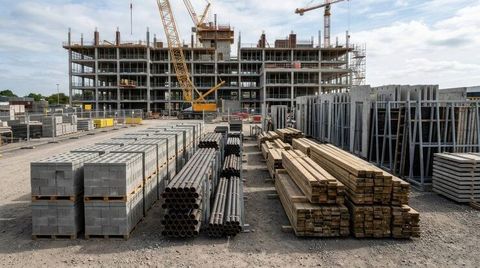
Steel construction materials suppliers commonly handle products such as reinforcement bars, structural sections, plates, sheets and pipes. The required grade, dimensions and specifications depend on the engineering design.
Bricks and Masonry Materials
Bricks, concrete blocks and stone are commonly used for walls, partitions and other masonry applications. These materials are available in different sizes, compositions and performance characteristics.
Their selection depends on factors such as load requirements, exposure conditions, thermal properties and local construction practices.
Roofing Materials
Roofing materials protect buildings from weather exposure and help manage water drainage. Common options include metal sheets, clay tiles, concrete tiles, asphalt-based roofing products and other roofing systems.
Roofing materials manufacturers produce products with different designs, installation requirements and weather-resistance characteristics. The suitable option depends on roof structure, climate and building design.
Insulation Materials
Insulation materials help control heat transfer and may also contribute to sound reduction. Common examples include fiberglass, mineral wool, foam boards and other insulation products.
Building materials suppliers provide insulation for roofs, walls, floors and industrial applications. Material selection depends on thermal performance, moisture conditions, fire requirements and installation space.
Waterproofing Materials
Waterproofing materials help prevent water penetration in areas such as roofs, basements, bathrooms, foundations and terraces. Common categories include liquid-applied coatings, membranes, cementitious products and protective sealants.
Waterproofing materials manufacturers develop products for different surfaces and exposure conditions. Correct surface preparation and application are important for the performance of a waterproofing system.
Prefabricated Building Materials
Prefabricated building materials are manufactured or assembled away from the final construction location before being transported for installation. Examples include precast concrete components, wall panels, modular sections and structural elements.
Prefabricated building materials suppliers support projects that use off-site production methods. Their suitability depends on design requirements, transportation arrangements and installation planning.
Construction Materials for Different Applications
The materials required for a project vary according to the building type and its intended use. Residential, commercial and industrial projects often have different performance requirements.
| Application | Common Materials | Typical Uses |
|---|---|---|
| Residential buildings | Bricks, cement, concrete, steel and tiles | Foundations, walls, floors and roofs |
| Commercial buildings | Structural steel, glass, concrete and insulation | Offices, retail spaces and large buildings |
| Industrial facilities | Steel sections, concrete and protective coatings | Factory structures and industrial floors |
| Roads and infrastructure | Aggregates, asphalt, concrete and steel | Roads, bridges and drainage systems |
| Roofing systems | Metal sheets, tiles and waterproofing membranes | Roof covering and water protection |
Industrial construction materials may need to meet specific requirements related to loads, exposure, chemical contact or operating conditions. Commercial building materials are often selected according to building design, occupancy, safety requirements and maintenance planning.
How to Choose Suitable Construction Materials
Selecting construction materials involves comparing technical requirements with practical project conditions. The following factors can help guide the decision.
Project requirements: Identify whether the material is intended for structural support, insulation, finishing, roofing or protection.
Quality and specifications: Review product specifications, applicable standards, test information and manufacturer documentation.
Environmental conditions: Consider rainfall, humidity, temperature changes, sunlight exposure and other local conditions.
Compatibility: Check whether the material is suitable for use with other products in the construction system.
Availability and distribution: Construction materials wholesale suppliers and local distributors can help project teams understand product availability, delivery arrangements and specification options.
Installation and maintenance: Consider the required installation process, skilled labor, inspection needs and future maintenance.
Regulatory requirements: Confirm that materials meet applicable building codes, safety rules and project specifications.
Role of Construction Material Suppliers and Manufacturers
Construction material manufacturers produce products according to defined specifications and production processes. Their responsibilities may include quality checks, product documentation, packaging and technical information.
Construction materials suppliers connect manufacturers with contractors, builders, retailers and other customers. Their product ranges may include cement, steel, concrete, roofing products, insulation and construction chemicals.
Construction material distributors manage the movement of products through supply networks. Some specialize in particular categories, while others handle multiple building product groups. Construction materials wholesale suppliers may coordinate larger quantities for projects that require regular or bulk deliveries.
Construction material dealers also play a role in local distribution by making commonly used products accessible to smaller contractors and individual projects.
Frequently Asked Questions
What are the most common construction materials?
Common construction materials include cement, concrete, steel, bricks, stone, timber, glass, roofing products, insulation and waterproofing materials.
What do construction materials suppliers provide?
Construction materials suppliers may provide building products such as cement, steel, aggregates, concrete, roofing systems, insulation and construction chemicals, depending on their product range.
What is the difference between manufacturers and distributors?
Manufacturers produce construction materials, while distributors coordinate their movement through supply networks. Suppliers may source products from manufacturers or distributors and provide them to construction projects.
What are bulk construction materials?
Bulk construction materials are products supplied in larger quantities for construction activities. Examples include sand, aggregates, cement, steel and ready-mix concrete.
Why are construction chemicals used?
Construction chemicals are used for applications such as bonding, waterproofing, sealing, surface protection and concrete modification. Their suitability depends on the product specification and intended application.
Conclusion
Construction materials form the foundation of residential, commercial and industrial development. Cement, concrete, steel, roofing, insulation, waterproofing and prefabricated products each serve different purposes within a building project.
Understanding material types, applications and selection factors helps project teams make informed decisions. Reviewing specifications, environmental conditions, supplier information and applicable building requirements is important when identifying suitable materials for construction work.

Related Post...