Construction Equipment Guide to Types, Uses and Selection
Construction equipment supports projects across many industries. From building foundations to developing highways, specialized machinery helps workers perform tasks involving excavation, lifting, material movement and surface preparation. Understanding the different types of construction equipment makes it easier to identify their functions and applications.
Construction equipment refers to machines, vehicles and mechanical tools used for building, infrastructure development, excavation and other construction activities. These machines help move materials, prepare land, transport heavy loads and complete tasks that require specialized mechanical operations.
Construction equipment ranges from compact machines used at smaller sites to heavy construction equipment designed for large infrastructure projects. Common examples include excavators, bulldozers, cranes, wheel loaders, backhoe loaders, concrete mixers and road rollers.
Construction machinery manufacturers develop equipment for different working conditions, project sizes and operational requirements. The machinery selected for a project depends on the type of work, site conditions, available space and material requirements.
Importance of Construction Equipment
Construction equipment plays an important role in residential, commercial, industrial and infrastructure development. Different machines support specific activities throughout a project's lifecycle.
Excavation and site preparation: Excavators, bulldozers and backhoe loaders help remove soil, clear land and prepare construction areas.
Material handling: Wheel loaders, forklifts and cranes move materials around construction sites. They help handle items such as soil, aggregates, steel components and concrete materials.
Lifting and transportation: Mobile cranes and tower cranes support the movement and placement of heavy materials at different heights.
Road development: Road construction equipment supports activities such as grading, asphalt paving, compaction and surface preparation.
Concrete operations: Concrete mixers, batching plants and concrete pumps help prepare, transport and place concrete during construction activities.
Types of Construction Equipment
Construction machinery is available in several categories. Each category performs different functions depending on the project and working environment.
Earthmoving Equipment
Earthmoving equipment is used to dig, move, level and transport soil or other materials. It is commonly used in building construction, mining, road development and land preparation.
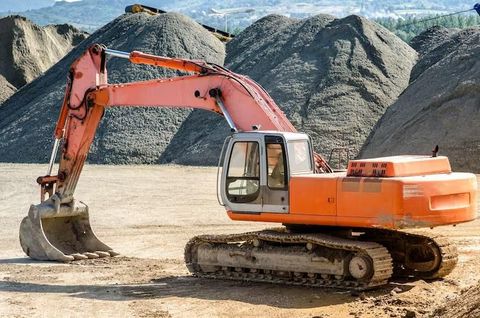
Excavators: These machines use a boom, arm and bucket to dig soil, remove materials and create trenches. Excavator manufacturers produce different configurations, including crawler and wheeled models.
Bulldozers: Equipped with a large front blade, bulldozers push soil, debris and other materials across a site.
Backhoe loaders: These machines combine a front loader bucket with a rear digging arm, making them useful for excavation and material handling.
Wheel loaders: Wheel loaders collect and transport loose materials such as sand, gravel and soil.
Motor graders: These machines level and shape surfaces, particularly during road construction.
Lifting and Material Handling Equipment
Lifting equipment moves heavy materials vertically or horizontally. It is commonly used in building projects, industrial facilities and infrastructure development.
Cranes are among the most recognized machines in this category. Tower cranes are frequently used in tall building projects, while mobile cranes can be transported between different work locations. Crane manufacturers develop machines with different lifting capacities and configurations.
Other material handling equipment includes forklifts, telehandlers, hoists and material lifts. The appropriate equipment depends on the load, lifting height and site conditions.
Road Construction Equipment
Road construction equipment supports the development, repair and maintenance of roads, highways and paved surfaces.
Common examples include asphalt pavers, road rollers, motor graders, milling machines and asphalt mixing plants. Asphalt paving equipment manufacturers develop machines used to distribute asphalt mixtures across prepared road surfaces.
Road rollers compact soil, gravel or asphalt, depending on the machine type and application. Milling machines remove selected layers of existing pavement during road maintenance and reconstruction.
Concrete Construction Equipment
Concrete construction equipment is used for preparing, transporting, placing and finishing concrete. It supports residential buildings, commercial structures, bridges and industrial projects.
Common machines include:
Concrete mixers: Combine cement, aggregates, water and other approved ingredients to produce concrete.
Concrete batching plants: Measure and combine materials according to specified mix requirements.
Concrete pumps: Transport concrete through pipelines to designated placement areas.
Concrete vibrators: Help consolidate freshly placed concrete by reducing trapped air.
Concrete placing booms: Distribute concrete across selected areas, particularly on larger construction sites.
Compaction Equipment
Compaction equipment increases the density of soil, gravel and other materials by applying pressure or vibration. It is important for preparing foundations, road surfaces and other construction areas.
Examples include single-drum rollers, double-drum rollers, plate compactors and rammers. Equipment selection depends on the material being compacted, the required depth and the available working space.
Common Construction Equipment and Their Uses
| Equipment | Main Function | Common Application |
|---|---|---|
| Excavator | Digging and material removal | Foundations and trenches |
| Bulldozer | Pushing and clearing materials | Land preparation |
| Backhoe loader | Digging and loading | General construction |
| Wheel loader | Moving loose materials | Material handling |
| Mobile crane | Lifting heavy loads | Building projects |
| Road roller | Compacting surfaces | Road construction |
| Asphalt paver | Laying asphalt mixtures | Roads and highways |
| Concrete mixer | Mixing concrete | Building and infrastructure |
Construction Equipment Manufacturers and Suppliers
Construction equipment manufacturers design and produce machinery for different construction applications. Their product ranges may include earthmoving machines, lifting systems, concrete equipment and road construction machinery.
Construction equipment suppliers and distributors connect manufacturers with contractors, infrastructure developers and other equipment users. Their product categories may include complete machines, attachments, replacement components and construction equipment parts.
Construction equipment dealers may represent specific manufacturers or handle several machinery categories. Buyers generally compare machine specifications, operating requirements, technical documentation and maintenance arrangements before making equipment decisions.
The market also includes construction equipment rental companies. Renting machinery may be considered when equipment is required for a limited project period or when a company does not need permanent ownership. Used construction equipment is another category, although its condition, maintenance history and operating hours should be evaluated carefully.
How to Choose Construction Equipment
Selecting suitable machinery requires an understanding of the work, site conditions and equipment specifications.
Project requirements: Identify the tasks the machine must perform, such as digging, lifting, grading or material transportation.
Machine capacity: Review operating weight, lifting capacity, digging depth, bucket capacity and other relevant specifications.
Site conditions: Consider ground conditions, working space, access routes, slopes and environmental factors.
Equipment configuration: Compare available attachments and machine configurations to determine whether they match the intended application.
Maintenance requirements: Review inspection schedules, replacement components, servicing needs and the availability of construction equipment parts suppliers.
Operator requirements: Consider the training and experience needed to operate the machine safely and according to its instructions.
Construction Equipment Safety and Maintenance
Construction machinery requires appropriate operation, inspection and maintenance. Equipment should be used by trained personnel who understand its controls, operating limits and safety procedures.
Important practices include checking equipment before operation, following load limits, maintaining clear communication around moving machinery and using appropriate protective equipment. Workers should also follow site-specific safety procedures and manufacturer instructions.
Regular maintenance may include checking hydraulic systems, brakes, tires or tracks, engine components, filters and electrical connections. Maintenance records help organizations monitor equipment condition and identify recurring problems.
Defective machinery should be taken out of operation until it has been inspected and cleared for use by qualified personnel.
Frequently Asked Questions
What are the main types of construction equipment?
Major categories include earthmoving equipment, lifting machinery, road construction equipment, concrete equipment, compaction machines and material handling systems.
What is heavy construction equipment?
Heavy construction equipment refers to large machines designed for demanding construction and infrastructure activities. Examples include excavators, bulldozers, cranes, wheel loaders and motor graders.
What do construction equipment manufacturers produce?
Construction equipment manufacturers produce machinery such as excavators, loaders, cranes, road rollers, concrete equipment and other specialized construction machines.
What is the difference between an excavator and a backhoe loader?
An excavator is primarily designed for digging and material removal. A backhoe loader combines a front loading bucket with a rear digging attachment, supporting multiple general construction tasks.
What should be checked before selecting construction machinery?
Important considerations include project requirements, machine capacity, site conditions, equipment specifications, maintenance needs, operator training and applicable safety requirements.
Conclusion
Construction equipment supports a wide range of building and infrastructure activities. Excavators, bulldozers, cranes, loaders, concrete machines and road construction equipment each perform specific functions.
Understanding equipment categories, applications and selection factors helps project planners identify machinery suited to their requirements. Proper operation, regular maintenance and attention to safety are also essential throughout the equipment's working life.

Related Post...